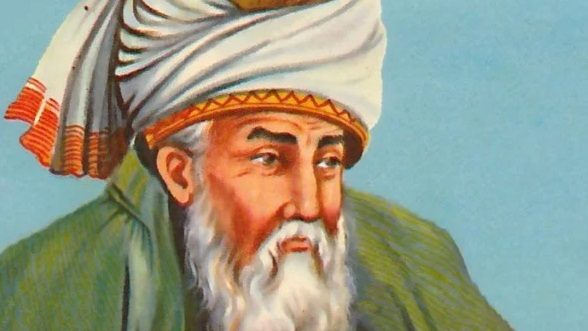
Rumi, also known as Jalāl ad-Dīn Muhammad Rūmī, was a Persian poet, jurist, theologian, and Sufi mystic who lived in the 13th century. He is widely regarded as one of the greatest poets in history and has had a profound influence on Islamic culture and literature.
Rumi’s Life and Works
Rumi was born in 1207 in Balkh, which is now part of Afghanistan. His family migrated to Konya, Turkey, when he was a child due to the Mongol invasion of their homeland. Rumi spent most of his life in Konya, where he was a scholar and a teacher at a madrasa, or Islamic school.
Rumi’s works are primarily in Persian, and he wrote in a variety of styles, including lyric poetry, mystical poetry, and didactic poetry. His most famous work is the Masnavi, a collection of poems that explores the nature of God, love, and human experience. The Masnavi is considered one of the greatest works of Persian literature and is still widely read and studied today.
Rumi’s poetry is characterized by its use of metaphor, allegory, and symbolism. He often used stories and parables to convey his messages, and his poems are rich with spiritual and mystical themes. Rumi’s poetry is also known for its universal appeal and has been translated into many languages, including English, French, German, and Spanish.
Rumi’s Teachings and Philosophy
Rumi’s teachings are rooted in Sufism, which is a mystical branch of Islam that emphasizes the personal experience of God through love and devotion. Sufism places great emphasis on the idea of union with God, and Rumi’s poetry reflects this theme throughout his work.
One of Rumi’s central teachings is the idea of love as a path to God. He believed that love was the greatest force in the universe and that it had the power to unite humanity with the divine. Rumi’s poetry is full of references to love, both human and divine, and he often used the metaphor of a lover and beloved to describe the relationship between the individual and God.
Another central theme in Rumi’s work is the idea of surrender to God. Rumi believed that the ego, or the sense of self, was an obstacle to spiritual growth and that true enlightenment could only be achieved by surrendering oneself to the divine will. He often used the metaphor of a drop of water merging with the ocean to describe this process of surrender.
Rumi also emphasized the importance of inner spiritual work and self-examination. He believed that true knowledge of God could only be attained through personal experience and that the path to enlightenment required constant self-reflection and purification of the heart.
Rumi’s Influence on Literature and Culture
Rumi’s influence on literature and culture has been profound and far-reaching. His poetry has been translated into numerous languages and has inspired countless writers, artists, and musicians around the world. Rumi’s themes of love, spirituality, and the human experience have resonated with people from all walks of life and continue to inspire new generations of readers and thinkers.
In recent years, Rumi’s popularity has grown even further, thanks in part to the efforts of contemporary translators and interpreters of his work. His poetry has become increasingly popular in the West, where it has been embraced by readers seeking spiritual guidance and inspiration.
Rumi’s legacy can be seen in many different areas of culture, from literature and music to film and fashion. His poetry has been set to music by numerous artists, including the legendary qawwali singer Nusrat Fateh Ali Khan and the contemporary musician and producer Sharam. Rumi’s ideas and philosophy have also inspired many writers, including the novelist.
 Shayari Classics
Leave a comment