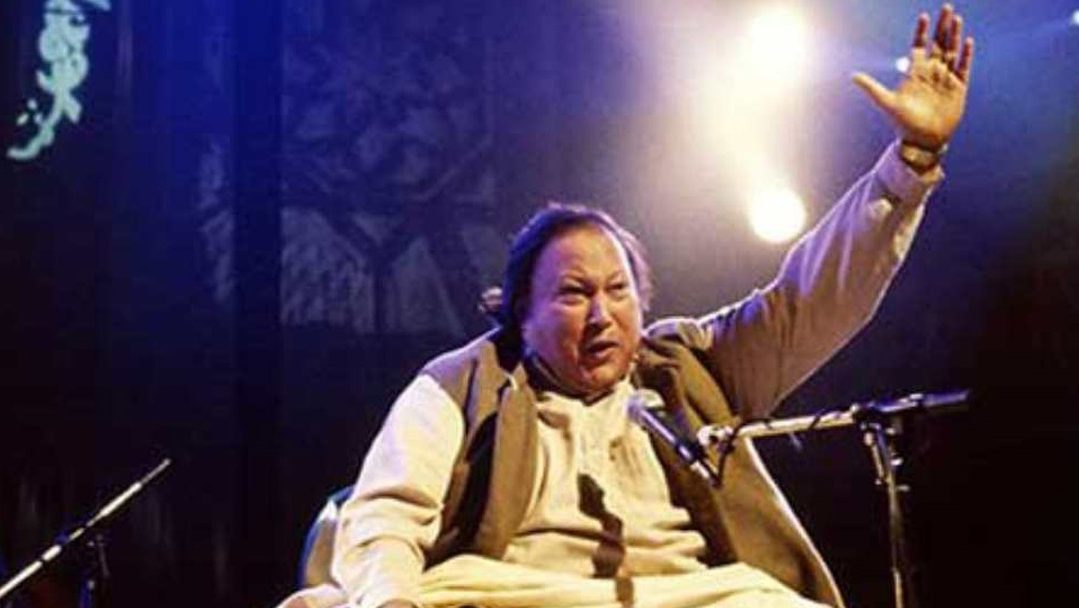
Nusrat Fateh Ali Khan, also known as “Shahenshah-e-Qawwali” (The King of Qawwali), is one of the most renowned and beloved musicians in the history of Pakistani music. He is widely regarded as the master of Qawwali, a traditional form of Muslim devotional music that originated in the Indian subcontinent. With his powerful voice, immense talent, and unwavering dedication to his craft, Nusrat Fateh Ali Khan captivated audiences around the world and left an indelible mark on the music industry.
Early Life and Career
Nusrat Fateh Ali Khan was born on October 13, 1948, in Faisalabad, Pakistan. He was born into a family of musicians, and his father, Fateh Ali Khan, was a well-known Qawwali musician. Nusrat Fateh Ali Khan began singing Qawwali at the age of 16 and quickly developed a reputation as a prodigious talent. He received his initial musical training from his father, and later, from his uncle, Mubarak Ali Khan.
In 1971, Nusrat Fateh Ali Khan made his first international tour, performing in the United Kingdom. He went on to tour extensively throughout the 1970s and 1980s, gaining a reputation as one of the greatest Qawwali performers of all time. During this time, he recorded numerous albums and worked with a wide range of artists, including Peter Gabriel, Eddie Vedder, and Michael Brook.
Music and Legacy
Nusrat Fateh Ali Khan’s music is characterized by his powerful and soulful voice, his mastery of traditional Qawwali techniques, and his ability to blend traditional Islamic devotional music with Western musical styles. His music is also marked by its spiritual intensity and its ability to evoke a sense of transcendence and mysticism in the listener.
Throughout his career, Nusrat Fateh Ali Khan recorded more than 125 albums, many of which went on to become best-sellers in Pakistan and other parts of the world. He also collaborated with numerous artists, both within and outside of the Qawwali tradition. Some of his most famous collaborations include his work with Peter Gabriel on the soundtrack for the film “The Last Temptation of Christ” and his collaboration with Michael Brook on the album “Night Song.”
Nusrat Fateh Ali Khan’s influence on the music industry cannot be overstated. He is widely credited with introducing Qawwali music to a global audience and for his contributions to the fusion of traditional Islamic devotional music with Western musical styles. His music has been sampled by numerous artists, including Massive Attack, and he is widely regarded as a pioneer of world music.
Personal Life and Legacy
Nusrat Fateh Ali Khan was a deeply spiritual man, and his music was informed by his faith and his devotion to Islam. He was known for his humility and his commitment to his craft, and he continued to perform and record music until his death in 1997.
Nusrat Fateh Ali Khan’s legacy lives on through his music, which continues to inspire and captivate audiences around the world. His influence can be heard in the work of numerous artists, both within and outside of the Qawwali tradition, and his contributions to world music are widely recognized and celebrated.
Conclusion
In conclusion, Nusrat Fateh Ali Khan was a true musical legend who left a lasting impact on the world. His unmatched vocal range and ability to fuse different genres of music has made him an inspiration to many. Despite his untimely death, his music continues to inspire and influence musicians around the world. His collaborations with Western artists helped introduce qawwali to a new audience, making him a true cultural ambassador for Pakistan. His contributions to music have earned him numerous awards and accolades, including the prestigious UNESCO Music Prize. Nusrat Fateh Ali Khan’s legacy will continue to live on through his music, which will undoubtedly continue to be celebrated for generations to come.
 Shayari Classics