Kispe Marte ho Aap Puchhte hain,
Mujhko Fikr-e-Jawab ne Maara !!
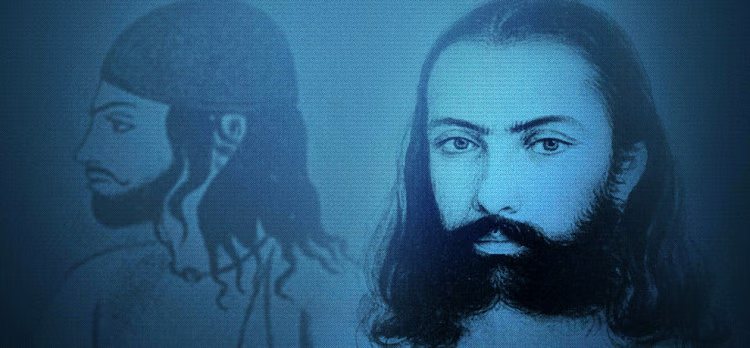
✍️ Momin Khan Momin, a luminary of 19th-century Urdu literature, stands as a testament to the enduring power of poetic expression. His verses, infused with profound emotion and intellectual depth, have left an indelible mark on the cultural landscape of South Asia. In this comprehensive exploration, we will delve into the life, works, and lasting influence of Momin Khan Momin, shedding light on the genius behind the pen that crafted some of the most celebrated Urdu poetry of his time.
Early Life and Background
Momin Khan Momin was born in Delhi in 1801, a period marked by the decline of the Mughal Empire and the socio-political turmoil that accompanied it. His given name was Muhammad Momin, and he later adopted the pen name “Momin,” meaning a believer. The socio-cultural ambiance of Delhi during Momin’s formative years played a pivotal role in shaping his poetic sensibilities.
Delhi, renowned for its literary and artistic richness, provided Momin with an environment that nurtured his innate talent. Surrounded by the echoes of classical Urdu and Persian poetry, Momin Khan Momin embarked on a poetic journey that would etch his name in the annals of literary history.

Literary Contributions
Momin Khan Momin’s poetry reflects the intricate tapestry of emotions and experiences that defined his era. His ghazals, marked by profound introspection and a deep understanding of human emotions, resonated with a wide audience. Momin’s verses are characterized by their eloquence, linguistic finesse, and a nuanced exploration of themes such as love, loss, and the transient nature of life.
One of his most famous compositions, “Deewan–e–Momin,” showcases Momin’s narrative prowess. This epic poem draws inspiration from classical Arabic literature and weaves a captivating tale that is legendary. Momin’s ability to seamlessly blend diverse cultural influences into his poetry attests to his intellectual breadth.
Influence and Legacy
Momin Khan Momin’s impact on Urdu literature extends beyond the realms of his poetry. He was a central figure in the Dabistan-e-Lucknow, a literary and cultural gathering in Lucknow that played a pivotal role in shaping the Urdu literary landscape of the 19th century. Momin’s association with this intellectual circle allowed his ideas to intersect with those of other literary luminaries of his time.
Furthermore, Momin’s influence can be traced to the later generations of poets who drew inspiration from his poetic style. His unique ability to blend classical forms with a contemporary voice set a precedent for Urdu poets who sought to navigate the evolving socio-cultural landscape of the 19th century.
Style and Themes
Momin Khan Momin’s poetry exhibits a distinctive style that combines classical Urdu and Persian poetic traditions with a modern sensibility. His ghazals, in particular, are characterized by intricate rhyme schemes, metaphors, and a deep exploration of human emotions. Momin’s verses often reflect the romantic ethos of the era, with a delicate balance between the earthly and the divine.
The themes in Momin’s poetry transcend the temporal and the transient. Love, a recurring motif in his ghazals, is presented not merely as a personal emotion but as a metaphor for the divine. Momin’s exploration of the mystical and the metaphysical adds layers of complexity to his verses, inviting readers to contemplate the profound truths embedded within his poetry.
Momin Khan Momin’s Personal Struggles
Despite his literary success, Momin Khan Momin faced personal challenges that added a layer of poignancy to his life. Financial difficulties and societal upheavals took a toll on Momin, underscoring the precarious nature of a poet’s existence during that era. The struggles he faced, both as an individual and as a poet, find echoes in some of his poignant verses, adding a biographical dimension to his body of work.
Rediscovery in Modern Times
While Momin Khan Momin’s poetry enjoyed acclaim in his lifetime, it experienced a resurgence in the 20th century. Literary scholars and enthusiasts, recognizing the timeless beauty of his verses, undertook efforts to preserve and promote his work. Translations, critical analyses, and anthologies have contributed to Momin’s renewed relevance, ensuring that his poetic legacy continues to captivate new generations.
🌷 Momin Khan Momin, the virtuoso of 19th-century Urdu literature, left an indelible imprint on the cultural and literary landscape of South Asia. His poetry, a harmonious blend of classical elegance and modern sensibilities, continues to resonate with readers today. As we traverse the pages of Momin’s life and verses, we gain not only a glimpse into the socio-cultural milieu of 19th-century Delhi but also a profound appreciation for the enduring power of poetic expression. Momin Khan Momin’s legacy is not merely a historical artifact but a living testament to the transformative potential of words that transcend time and space.

 Shayari Classics
This piece is full of errors and exaggeration. Seems to have been generated through AI. A writeup that is best avaoided if you want to know about Momin and his poetry.
LikeLike