Hum Aah bhi Karte hain to ho Jaate hain Badnaam,
Wo Qatl bhi Karte hain to Charcha nahi Hota !!
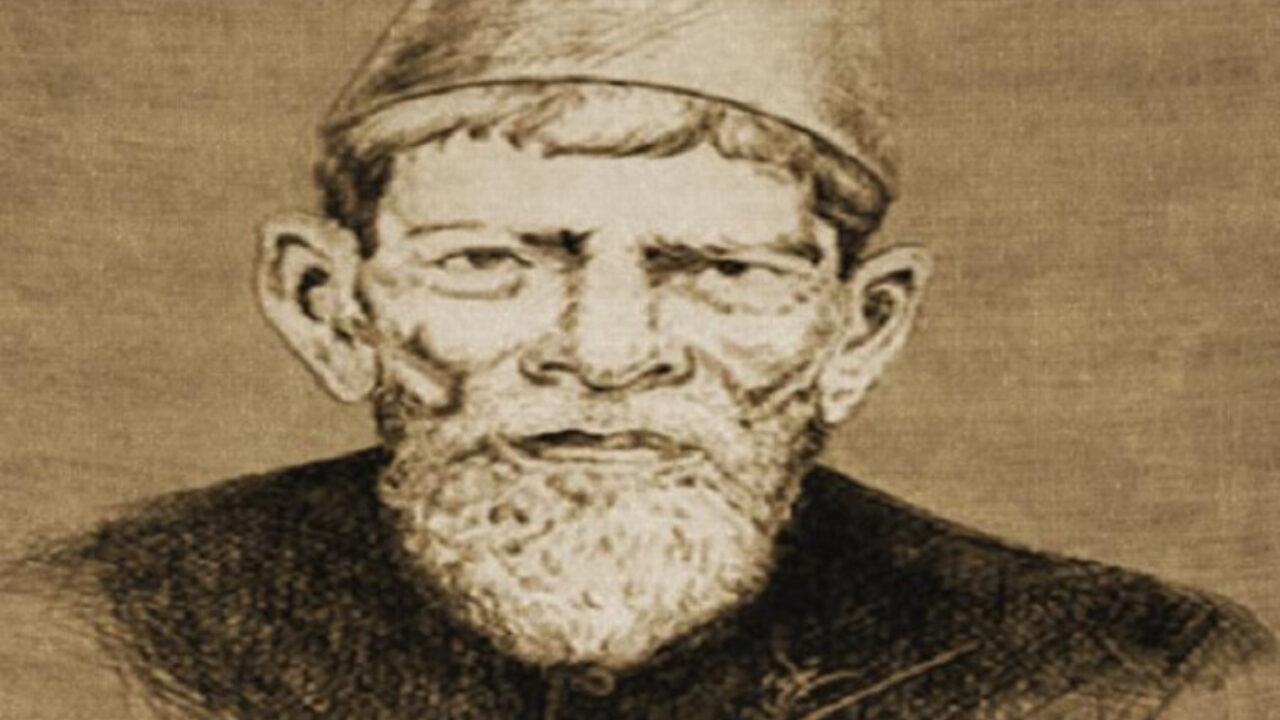
✍️ Akbar Allahabadi, a luminary in the realm of Urdu poetry, left an indelible mark on the literary landscape of India. Born as Akbar Hussain Rizvi in 1846 in Allahabad, British India, he went on to become a poet of profound significance during the late 19th and early 20th centuries. This article delves into the life, works, and enduring legacy of Akbar Allahabadi, capturing the essence of his poetic brilliance and the cultural tapestry he wove with his words.
Early Life and Education
Akbar Allahabadi’s journey began in the culturally rich city of Allahabad, where he was born into a family that appreciated literature. His father, Shams-ul-Ulema Maulvi Manzoor Hussain, played a pivotal role in fostering young Akbar’s interest in poetry and language. Akbar’s early education was steeped in traditional Islamic studies, providing him with a strong linguistic foundation.

Literary Evolution
As Akbar Allahabadi matured, his literary prowess blossomed. His poetry reflects a unique amalgamation of classical Urdu poetic traditions with a contemporary touch. He was not just a poet; he was a keen observer of society, politics, and human nature. His verses often carried a satirical edge, using humor and wit to comment on the social issues of his time.
Akbar Allahabadi’s Unique Style
One of the distinguishing features of Akbar Allahabadi’s poetry is his mastery over the Urdu language. His verses were not only aesthetically pleasing but also infused with a profound understanding of the language’s nuances. He seamlessly blended classical Urdu with colloquial expressions, creating a poetic style that resonated with a broad audience.
Satire as a Tool
Akbar Allahabadi’s poetry often employed satire as a powerful tool for social commentary. His sharp wit and keen observations made him a prominent voice in critiquing the prevailing social and political norms. Through his verses, he fearlessly addressed issues such as inequality, hypocrisy, and the struggles of the common man.
Notable Works
Several collections of Akbar Allahabadi’s poetry have endured the test of time. “Kulliyat-e-Akbar” and “Aurat Nama” are among his most celebrated works. In these volumes, he explored themes of self-discovery, spirituality, and the human condition. His words not only resonated with the literary elite but also found resonance among the masses, cementing his place as a poet for the people.
Social and Political Commentary
Living in a period marked by significant political and social changes, Akbar Allahabadi used his poetry as a medium to voice his opinions. He fearlessly criticized the British colonial rule and the socio-political structures that perpetuated inequality. His verses became a rallying cry for those seeking change and justice.
Impact on Urdu Literature
Akbar Allahabadi’s contributions to Urdu literature extend beyond his poetic creations. He played a crucial role in shaping the literary landscape of his time, influencing subsequent generations of poets. His bold approach to addressing societal issues through poetry paved the way for a new era of Urdu literature that embraced both tradition and modernity.
Legacy and Recognition
Despite facing challenges and controversies during his lifetime, Akbar Allahabadi’s legacy has only grown stronger with time. His poetry continues to inspire and resonate with readers, and his contributions have earned him a revered place in the annals of Urdu literature. Various literary forums and institutions commemorate his life and works, ensuring that his impact endures for generations to come.
🌷 In the vast tapestry of Urdu literature, Akbar Allahabadi stands as a luminary whose brilliance continues to illuminate the literary world. His poetry, marked by wit, wisdom, and a deep understanding of the human experience, remains a testament to the enduring power of words. Exploring the life and works of Akbar Allahabadi is not just a journey into the past; it is an invitation to understand the intricate interplay of language, culture, and societal evolution through the lens of a visionary poet.

 Shayari Classics
Leave a comment