Haath Kaanton se Kar liye Zakhmi,
Phool Balon mein Ik Sajane ko !!
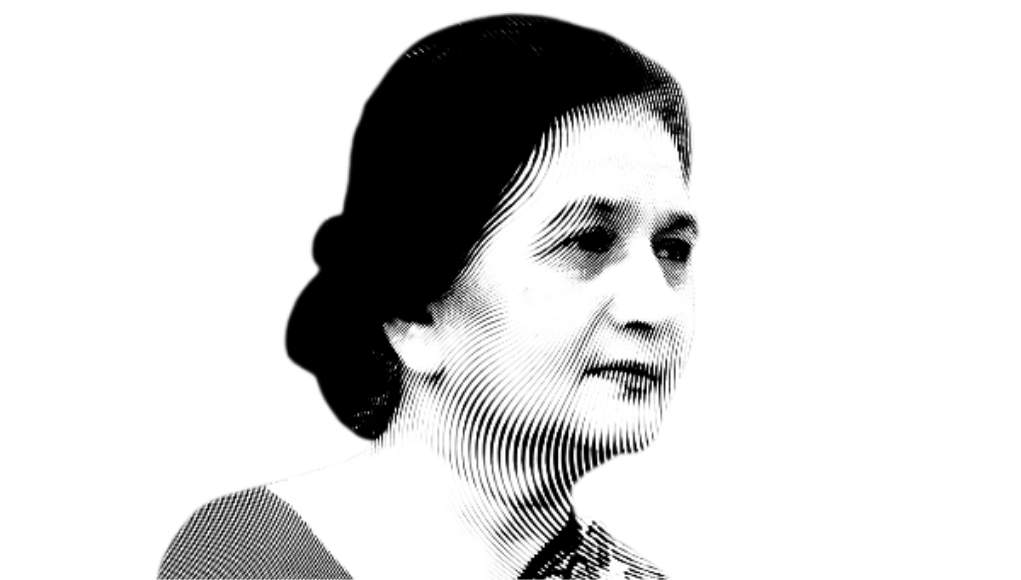
✍️ Ada Jafarey’s journey into the world of poetry commenced at the tender age of twelve, when she began composing verses under the pen name Ada Badayuni. Born to Maulvi Badrul Hasan on August 22, 1924, in Badayun, Uttar Pradesh, India, Ada exhibited a prodigious talent that would later evolve into the poetic brilliance for which she is celebrated.
Marriage and Literary Partnership
On January 29, 1947, Ada Jafarey married Nurul Hasan Jafarey in Lucknow. Nurul Hasan, a top-ranking civil servant in the Federal Government of India, was not only Ada’s life partner but also a significant literary influence. The couple’s relocation to Karachi after the partition in 1947 marked a new chapter in Ada’s life. Nurul Hasan, a prominent littérateur who contributed columns to both English and Urdu newspapers, served as the president of the Anjuman-i Taraqqi-i Urdu.

Family Life and Literary Pursuits
Despite the societal norms prevalent during that era, Ada Jafarey’s marriage did not hinder her creative pursuits. In fact, her husband’s literary inclinations served as a catalyst for her own poetic expressions. The couple had three children – Sabiha, Azmi, and Aamir – and their family life became intertwined with Ada’s literary endeavors, showcasing the harmonious balance she struck between domesticity and creativity.
Literary Prowess and Genre Mastery
Ada Jafarey’s literary repertoire spanned various genres, primarily focusing on Ghazals. However, her exploration extended to azad nazm and Urdu Haiku, demonstrating her versatility and mastery over different forms of Urdu poetry. In her ghazals, Ada adopted the pen name “Ada Jafarey,” signifying a nuanced expression of her poetic identity.
Notable Works: Shehr-i-Dard and Beyond
Ada Jafarey’s poetic journey gained momentum when her first ghazal was published in Akhtar Sheerani’s magazine, Roman, in 1945. Her debut collection, “Main Saz Dhoondti Rahi,” emerged in 1950, setting the stage for a prolific career. Subsequently, the publication of “G̲h̲azal Numa” in 1987 showcased not only her poetic prowess but also her dedication to preserving the legacy of previous Urdu poets.
Her extensive body of work included five collections of Urdu poetry: “Shehr-i-Dard,” “Ghazalan,” “Tum to Waqif Ho!,” “Safar Baqi,” and “Mausam, Mausam.”
Her venture into Urdu Haiku resulted in the publication of “Saz-e-Sukhn Bahana hai.” Additionally, Ada Jafarey penned her autobiography, “Jo Rahi so BeKhabri Rahi,” and authored forty research papers.
The timeless appeal of her ghazal, “Honthon pe kabhi un ke mera naam hi aaye,” sung and popularized by Ustad Amanat Ali Khan, solidified her position as a poetic luminary.
Awards and Accolades
Ada Jafarey’s literary contributions garnered recognition both nationally and internationally. In 1955, the Hamdard Foundation, New Delhi, hailed her as the “Outstanding Female Poet of the Century.” The Adamjee Literary Award by the Pakistan Writers’ Guild in 1967 honored her second poetic collection, “Shehr-i-Dard.”
Her exceptional contributions led to prestigious awards such as the Medal of Excellence from the Government of Pakistan in 1981. The Baba-e-Urdu, Dr. Maulvi Abdul Haq Award from the Pakistan Academy of Letters in 1994, the Quaid-e-Azam Literary Award in 1997, and the Pride of Performance Award for Literature in 2003 highlighted her enduring impact.
The Kamal-e-Fan Award for lifetime achievement in literature by the Pakistan Academy of Letters in 2003 further solidified her position as a literary stalwart.
Feminist Views and Artistic Expression
Ada Jafarey’s legacy extends beyond her literary works; she was a staunch supporter of feminism.
In articulating her views, she expressed,
“I did not accept the restrictions imposed by men, rather accepted only those restrictions which my mind has imposed upon me.”
Ada believed in expressing herself through symbolism and allusion, emphasizing the intrinsic beauty of poetry as a powerful medium for conveying nuanced ideas.
Critical Acclaim
Critics praised Ada Jafarey’s poetry for its politeness of expression, seamlessly blending old and new thoughts in a unique artistic manner. Qazi Abdul Ghaffar, in his introduction to Ada Jafarey’s collection of verses, particularly mentioned her contribution to the feminist way of expression.
Renowned Urdu poet and critic, Jazib Qureshi, lauded her as,
“the first and only lady poet who carried in her poetry the eternal colors of Ghalib, Iqbal, and Jigar“.
🌷 Ada Jafarey’s life and literary contributions form an indelible chapter in the history of Urdu poetry. From her early days as Ada Badayuni to being hailed as “The First Lady of Urdu Poetry,” her journey is a testament to resilience, creativity, and profound artistic expression. As we delve into the rich tapestry of Ada Jafarey’s life, we encounter not just a poet but a luminary whose words transcend time, societal norms, and echo with timeless wisdom. The legacy of Ada Jafarey continues to inspire generations, shaping the landscape of Urdu literature with an enduring impact.

 Shayari Classics
Leave a comment